

Offline-Lizenzaktivierung für Surveillance Station

Aktualisiert am Oktober 2026
Offline license activation is how you add camera licenses to Surveillance Station when the NAS has no route to the Internet. Normally the server talks to Synology to confirm a key before it accepts it. On an isolated network that check cannot happen, so Synology lets a computer or a phone do it on the server’s behalf.
This guide walks through offline license activation with both supported apps, Surveillance Station Client and DS cam, explains what each step is really doing, and covers the mistakes that make an offline change quietly fail to apply.
SynoPower Club-Punkt: Most of the recording servers we help with offline sit in factories, clinics and building management rooms, where the camera network is deliberately cut off from everything else. The owners usually assume that means opening a hole in the firewall just to add four licenses. It does not. Offline license activation turns the phone in your pocket into the courier: it collects the approval while it has signal and delivers it when you walk back into the server room. The whole job takes less time than finding the person who knows the firewall password.
Why Offline License Activation Exists #
A Surveillance Station license is checked against Synology when it is added or removed, because Synology has to know that a key is active on exactly one server. That is what stops the same key being used twice. On a normal network the NAS does this check itself in a second or two.
Plenty of surveillance systems are built without that connection on purpose. Keeping cameras on a closed network is a sound security choice, and offline license activation exists so that you do not have to give that choice up every time you add a camera.
Offline License Activation vs Activating on the NAS #
| On the NAS | Offline license activation | |
|---|---|---|
| Where the Synology check happens | On the NAS itself | On a computer or phone with Internet |
| Does the NAS need Internet | Ja | NEIN |
| Where you enter keys | Surveillance Station, License | Surveillance Station Client or DS cam |
| When the change applies | Immediately | When the app next signs in to the server |
| Can delete keys too | Ja | Ja |
If your NAS can reach the Internet, use the normal route in our license installation guide. It is quicker and there is nothing to carry back and forth.
Was Sie vor dem Start benötigen #
- One of the two apps. Surveillance Station Client for Windows or Mac, from the Synology download archive, or DS cam from the App Store or Google Play.
- Your license keys. If you bought from us they are in the order email, delivered within seconds. See how our 24/7 delivery works.
- Your server address and credentials. The app needs them to sign in once you are back on the isolated network.
- A device that can reach both networks. One with Internet access first, then the camera network.
Offline License Activation in 4 Steps #
Both apps follow the same four-step pattern for offline license activation. The sections after this one give the exact taps and clicks for each app.
Start somewhere with Internet #
Take a computer with Surveillance Station Client, or a phone with DS cam, to any network that can reach the Internet. The NAS itself stays where it is.
Queue the license change #
Open the license manager from the login screen, accept the terms, choose your Surveillance Station server and enter the keys you want to add or delete. The app checks them with Synology and stores the result.
Carry the device to the NAS network #
Bring the same computer or phone onto the isolated network where the Surveillance Station server runs. Nothing needs to be exported or copied by hand.
Sign in and let it sync #
Sign in to the server with the same app. The licenses you queued are added or deleted automatically, and the new total shows under Surveillance Station, License.
Method 1: Surveillance Station Client on Windows or Mac #
The desktop client is the easiest option when you are already working from a laptop in the server room. Our Surveillance Station Client guide covers the app itself.
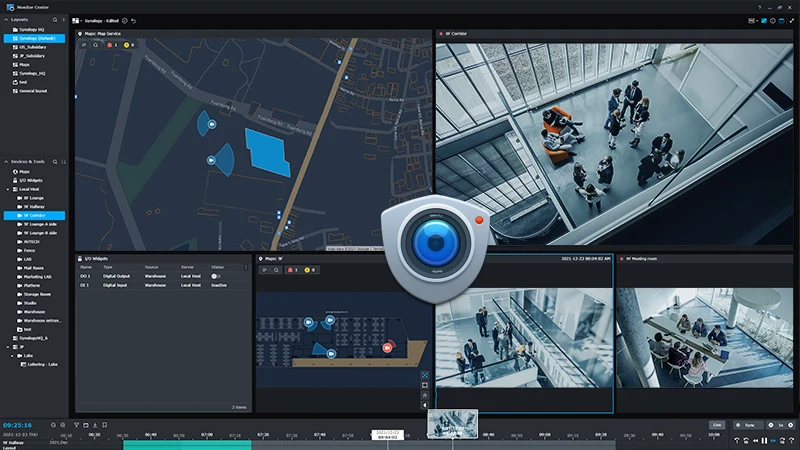
- Launch Surveillance Station Client on a network with Internet access.
- On the login page, click the icon in the lower right corner.
- Open the License Management tab and click Manage License.
- Click Add License or Delete License, read the terms, tick the box and click Next.
- Select your server from the list, or click Add and enter its details. Click Next.
- Enter the license keys, click Next, check the summary and click Finish.
- Return to the network where the client can reach your Surveillance Station server.
- Sign in. The licenses are added or deleted automatically.
Method 2: DS cam on iOS or Android #
DS cam is the better choice when you only have a phone with you. The flow is the same, with the menu in a different corner.
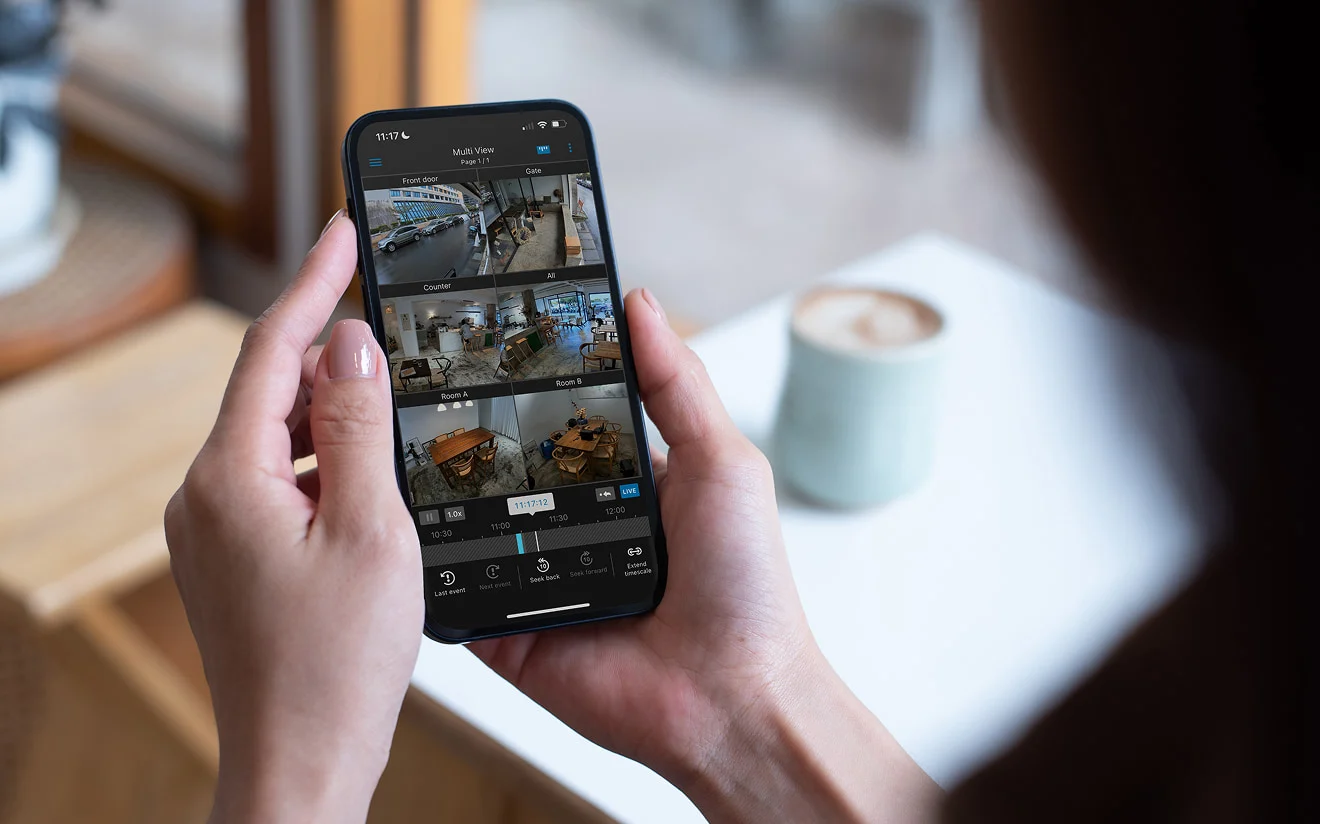
- Launch DS cam on a network with Internet access.
- On the login page, tap the icon in the lower left corner, then Offline License Validation.
- Tap Manage License, then Add License or Delete License, and agree to the terms.
- Select a server, or tap Add Server and enter its details. Tap Next.
- Enter the license keys and tap Confirm.
- Return to the network where DS cam can reach your Surveillance Station server.
- Sign in. The licenses are added or deleted automatically.
Deleting Licenses Offline to Move Them #
Offline license activation works in both directions. Choosing Delete License instead of Add License frees keys from an isolated server, which is the first half of moving them to another one. A key can only be active on one server at a time, so it has to be deleted before the second server will accept it.
The full process for moving keys between servers, including what to do when the old one no longer boots, is in our Synology license transfer guide.
Isolated Sites, CMS and Multiple Recording Servers #
The server picker in both wizards is what makes larger sites manageable. Each license change is queued for a specific server, so on a site with several recording servers you can prepare all the changes in one go and then sign in to each server in turn.
In a CMS deployment, pick the recording server that will actually run the cameras rather than the host. Keep a short note of which keys went to which server. Surveillance Station does not keep deleted keys in its history, and that note is what you will want the next time hardware is replaced.
Common Offline License Activation Mistakes #
- Signing in to the wrong server. The change only applies to the server selected in the wizard.
- Switching apps halfway. A change queued in DS cam is delivered by DS cam, not by the desktop client.
- Adding a key that is still active elsewhere. Delete it from the old server first, online or offline.
- Testing with a suspicious key. Keys from a generator fail this check by design. Here is what a keygen does to your NAS.
Offline License Activation Limits and Notes #
- Offline license activation covers adding and deleting device licenses. It does not replace an Internet connection for package updates or other Synology services.
- The default licenses that come with your NAS are already active and never need offline activation.
- The device doing the check needs Internet access only while you queue the change.
- The change applies the next time that app signs in to the selected server, not before.
Häufig gestellte Fragen #
What is offline license activation in Surveillance Station? #
It is a way to add or delete camera licenses when the NAS has no Internet connection. A computer or phone does the online check with Synology, then hands the result to the NAS on the local network.
Which apps support offline license activation? #
Two apps can do it: Surveillance Station Client for Windows and Mac, and DS cam for iOS and Android. Both use the same process.
Does the NAS ever need to go online? #
Not for this. The point of offline license activation is that the server stays isolated. Only the computer or phone needs Internet access, and only for the first half of the process.
Can I delete licenses offline as well as add them? #
Yes. The same screen offers Add License and Delete License. Deleting offline is how you free keys from an isolated server so they can be moved to another one.
Do I need to sign in to the same server I selected? #
Yes. The change is tied to the server you chose in the wizard, so sign in to that server when you bring the app back to the local network.
Why did my offline license activation not apply? #
The most common reasons are signing in to a different server than the one selected, signing in through a different app than the one used to queue the change, or a key that is still active on another server.
Does offline license activation work with a CMS setup? #
The wizard lets you pick which server receives the licenses. In a CMS deployment, choose the recording server that will run the cameras, then sign in to that server to finish.
Is offline license activation safe for keys bought online? #
Yes. Official keys bought from an authorized partner activate the same way online or offline. A key that fails both ways is worth checking with the seller before you try anything else.
Referenzen und Video-Anleitungen #
Primary sources for the steps above, plus three videos on the two apps that make offline license activation possible.
- Synology Knowledge Center: managing device licenses offline is the official version of both methods.
- Synology Knowledge Center: transferring surveillance device licenses explains why a key can only be active on one server.
- Surveillance Station Client downloads for Windows and Mac, every released version.
- Surveillance Station package page with current features and requirements.
- Lizenzpaket für Überwachungsgeräte, the official product page for camera licenses.